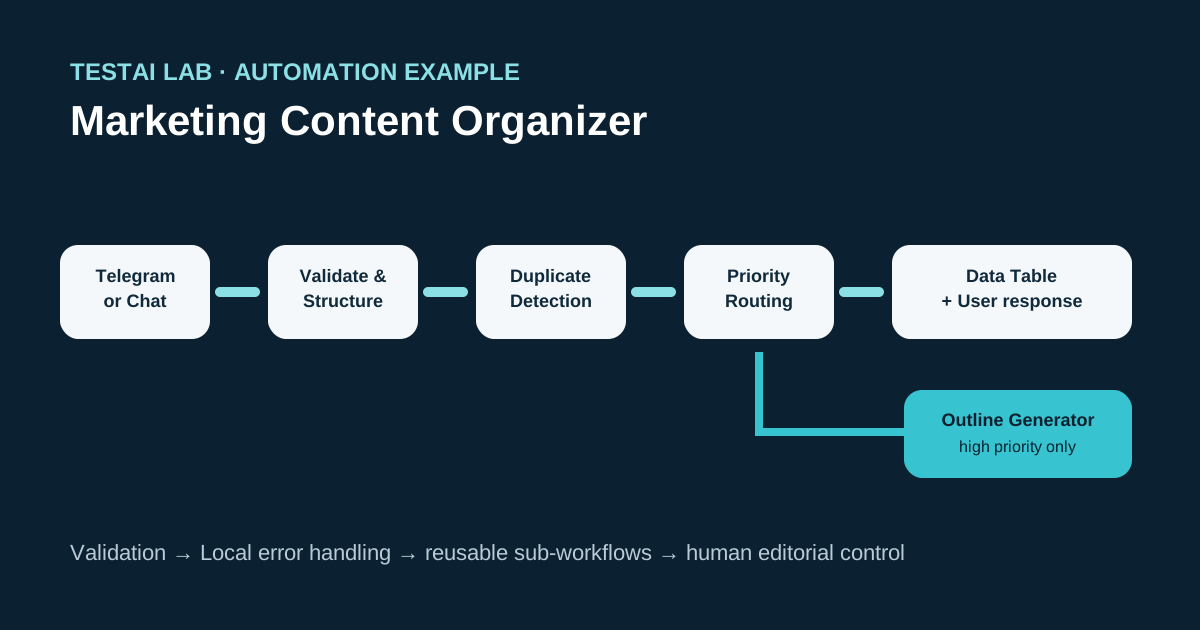
Marketing Content Organizer is an educational n8n project for processing marketing ideas systematically. A user sends an idea through Telegram, AI validates and structures it, the workflow checks for semantic duplicates, assigns a priority, and stores the result in an n8n Data Table. A separate sub-workflow creates an outline for high-priority ideas.
Why this workflow exists
Unprocessed ideas are easily lost in chats and notes. They rarely share a consistent title, audience, channel, priority, or next action. The workflow turns a short message into a structured content-planning record. It does not publish AI-generated text automatically; editorial control remains with a person.
Processing flow
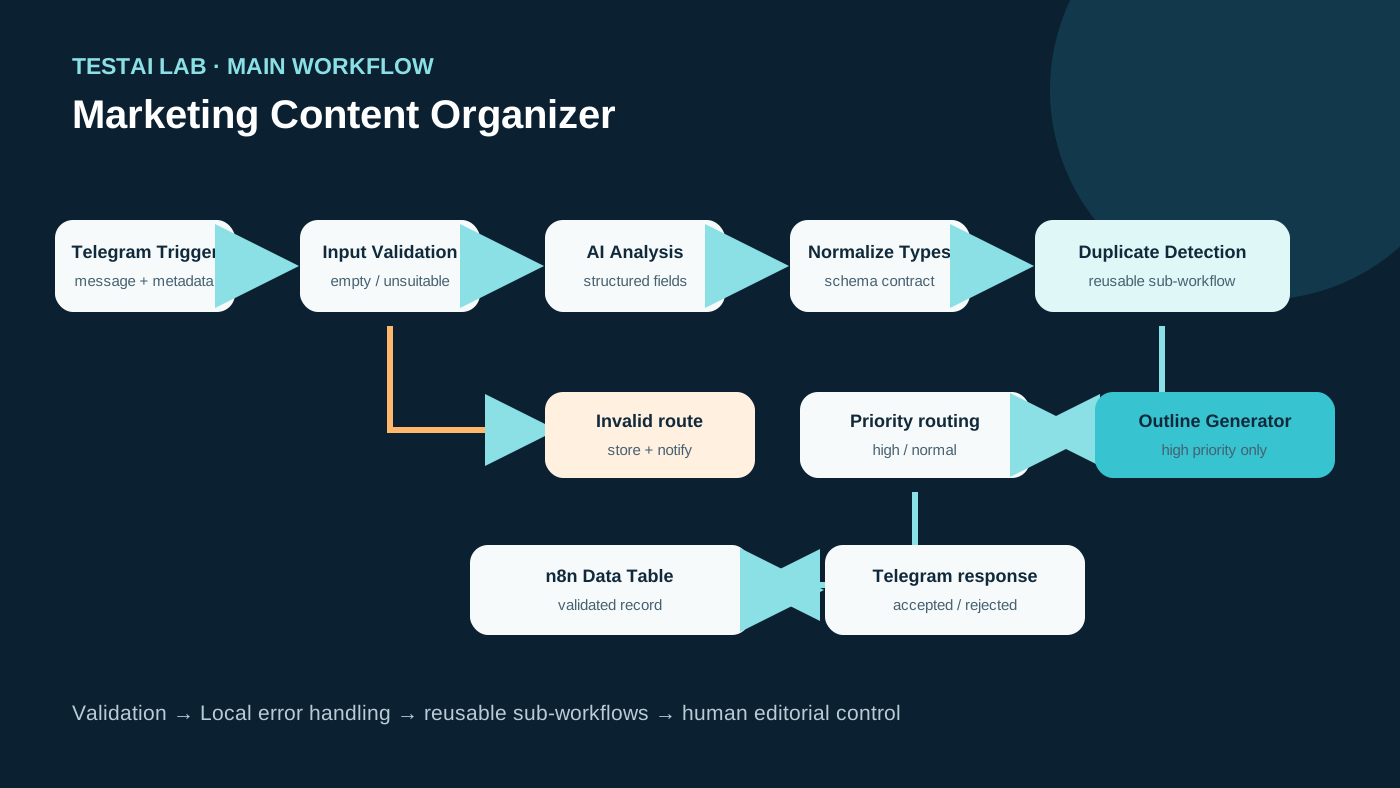
Telegram → input check → AI analysis → Structured Output Parser → normalization → valid/invalid → Duplicate Detection → priority → Outline Generator → Data Table → Telegram response
The main workflow receives the text and message metadata, rejects empty input, analyzes the idea, normalizes field types, and separates valid and invalid scenarios. A valid idea is checked for duplicates. High-priority ideas are sent to the Outline Generator before the record is stored.
Data model
The marketing_content_ideas table stores the author, Telegram IDs, original text, submission time, validation result, title, topic, description, audience, channel, priority, status, AI confidence, and content outline.
Types are aligned between Edit Fields and the Data Table: Telegram IDs are Strings, submitted_at is Date/Time, is_valid_idea is Boolean, and ai_confidence is Number. This prevents write errors that can look like AI failures while actually originating in the data schema.
Duplicate Detection
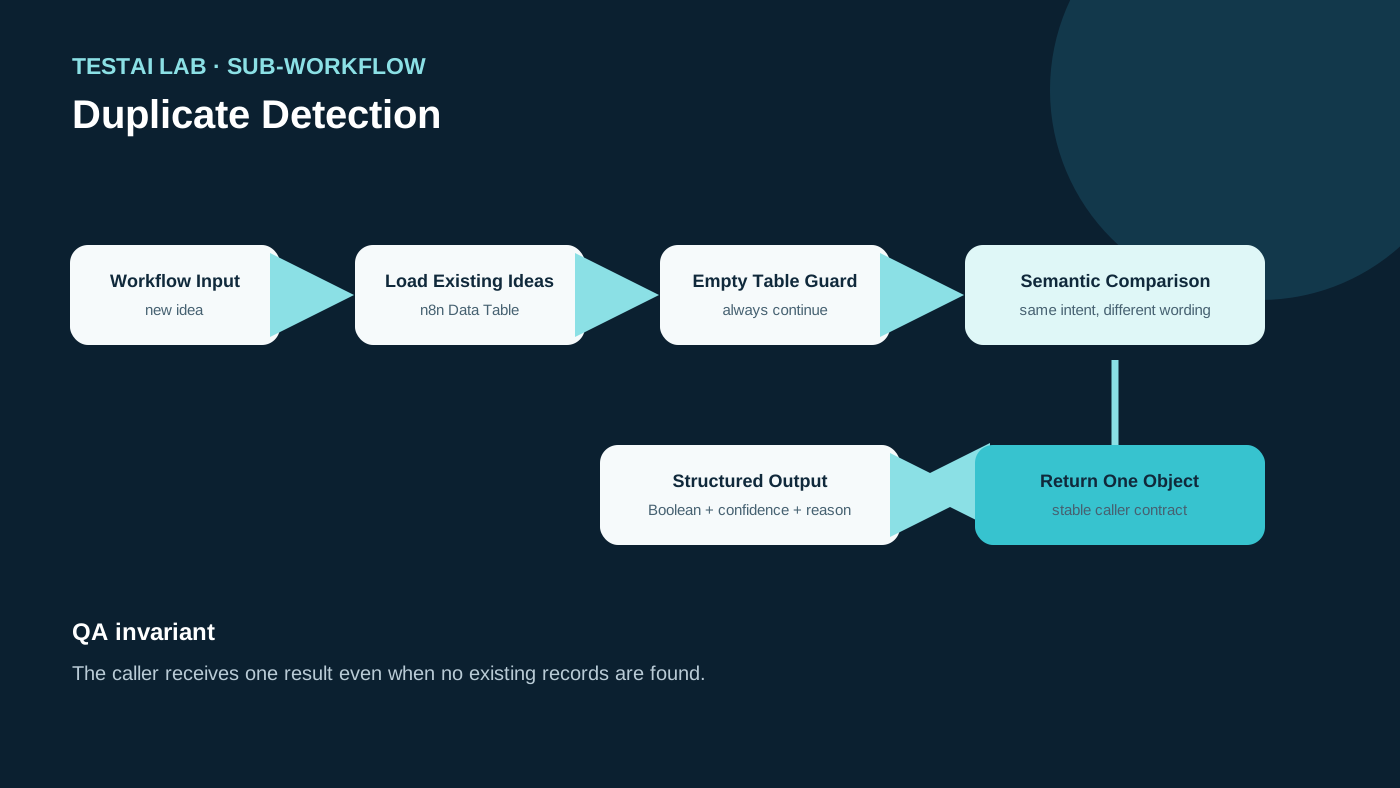
This sub-workflow compares a new idea with existing records and still returns a result when the table is empty. Its final node always emits one object containing Boolean is_duplicate, a numeric confidence value, and a reason. Semantic comparison can identify the same underlying idea even when the wording differs.
Outline Generator
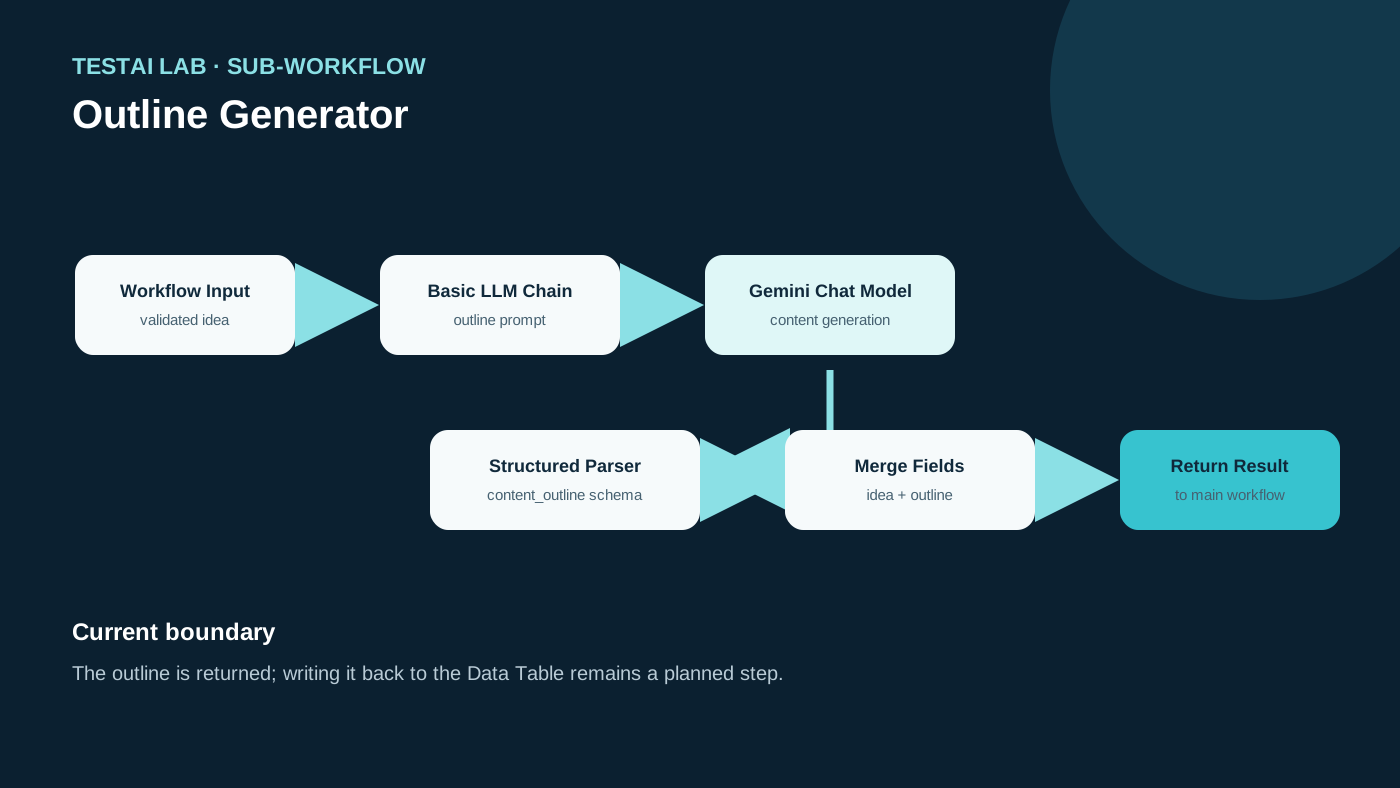
For a high-priority idea, this sub-workflow creates content_outline. A Structured Output Parser enforces the response schema, while the final node combines the outline with the original idea.
Confirmed tests
- empty or unsuitable input reaches the invalid route;
- a valid idea passes analysis and normalization;
- the corrected Data Table accepts records with the intended types;
- Duplicate Detection returns output instead of a misleading
Succeededrun with no result; - an English-language idea was processed and stored successfully;
- Outline Generator completes its internal path and returns a structured outline.
A green n8n status does not necessarily mean a successful business outcome. If an intermediate node returns zero items, an execution may be marked Succeeded even though the user receives no result. The tests therefore checked both execution status and actual output.
Current limitation
Outline Generator creates and returns an outline, but writing content_outline back to the Data Table has not yet been completed. The current version is an idea organizer and analyzer with outline generation, rather than a fully automated publishing system.
Full article generation, human approval, and website publishing belong to a later project stage.
Safety and editorial control
Telegram input is treated as untrusted data. The Structured Output Parser constrains AI output. Types are checked before writing, Duplicate Detection has a stable output contract, and publishing requires separate human approval.
Lessons learned
A clear data contract matters more than an especially creative prompt. Every sub-workflow needs a predictable return structure. Technical execution success and useful business output must be tested separately.
The project JSON is intentionally not published. This article explains the architecture, decisions, and test results without exposing production configuration or credentials.
Leave a comment
Share your thoughts about the article. No account is required.
Comments
Loading comments…